
The paradoxes of including migrant people in environmental work
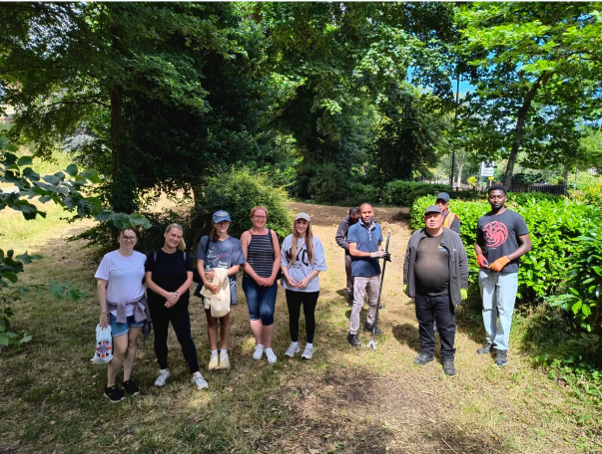
When someone moves from one environment to another, they often lose their knowledge of the landscape (https://whatworkswellbeing.org/practice-examples/sheffield-environment-movement-access-to-green-space-inequality-and-measuring). This is very much the case when you migrate from one country to another, which often means moving between different climate zones. Many asylum seekers, refugees, and other migrants have told us that they have only learned about local green assets, such as parks, through work delivered by us. While knowing that you have helped people to make that connection is motivating, it is sad to see that so many obstacles affect nature for those who, perhaps, need it the most, as they struggle with a sense of loss, having left behind their families, and having suffered poverty, destitution, and in some cases- abuse in their country of origin, as well as on the way to the UK. Language barriers and culture barriers, as well as lack of understanding the concept of volunteering (https://www.migrationyorkshire.org.uk/refugee-integration-yorkshire-and-humber/our-toolkits/refugee-participation-toolkit/what-you-need-know/barriers-refugee-participation)make participation in vital community initiatives difficult for some of our clients. Yet, these are also often the very people who are very much aware of the relentless impact of climate change on their lives, and they can- and they should be part of the important work to support our planet, and our local area.
Environmental can also be the opportunity to unleash one’s potential. It enables us to marvel and think of the infinite, to dream, rest, recuperate and engage in mindfulness. It provides opportunities for volunteering and gaining skills (e.g., through tree planting, litter picks and other forms of environmental stewardship), meeting new people and combatting social isolation, and making new friendships- often across different cultures.
At ICOS, we have been effective at connecting migrant people and their environment. Our volunteering work has enabled volunteers to gain a track record, contribute to their local community, and combat social isolation.
Susan, a former flight attendant who sought asylum in the UK in late 2020. Restricted from working while awaiting her asylum status, Susan experienced isolation, language barriers, and mental health struggles during the pandemic. In March 2021, Susan joined the East Rangers initiative by the ICOS. Volunteering in park clean-ups and environmental workshops helped her practice English, improve her mental well-being, build local connections, and regain a sense of purpose. Susan’s journey illustrates how community volunteering offers crucial social integration, confidence, and practical skills for asylum seekers navigating trauma and isolation. More information about her volunteering could be found here: https://icos.org.uk/wp-content/uploads/2021/06/East-Rangers-Case-Study-Susan.pdf
Olusegun, a University of Sunderland international student, joined the Greener Activities Program in 2023 to build network connections and serve his community. Through hands-on environmental training, including litter clearance, and park maintenance, Olusegun developed practical conservation skills and a direct understanding of responsible waste management and ecology, including in areas such as tree identification. The project structured these tasks to enhance volunteers’ practical competencies, teamwork, and environmental consciousness. Bridging cultural gaps beyond his university setting, Olusegun expanded his social network, gaining personal fulfillment and valuable real-world skill sets through community volunteering. More information about his journey could be found here: https://icos.org.uk/wp-content/uploads/2023/09/Greener-Activities-Programme-Olusegun-Case-Study.pdf
Our work has led to measurable outcomes for people, the community and the planet:
Seeing Blue 2 Engaged migrant women and children in coastal and marine conservation through hands-on beach cleans, seaweed identification, rock pooling, and eco-crafts using recycled natural materials. Involved 94 women and children. Over 85% of the women reported increased marine environmental awareness, while 78% experienced improved mental well-being and reduced social isolation.
The Nature Hubs project delivered targeted, community-driven environmental restoration and educational initiatives throughout Backhouse Park and the broader St Michael’s ward in Sunderland. It sought to connect local families, children, and residents, including migrant people with nature through hands-on ecology workshops and species identification. It achieved significant results, including: 18 events (including 2 large-scale community events), 538 total attendees (318 adults, 220 children), the involvement of a total of 61 volunteers (51 new recruits, 10 long-standing). As part of the project, we planted 41 native trees, as well 50 m² wildflower meadow planted and maintained and installed 5 hedgehog homes constructed (some were built using reclaimed materials).
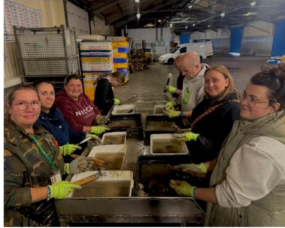
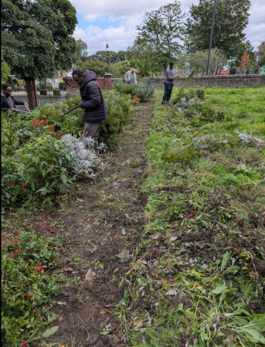
These examples show that a small, migrant-run community organization is capable of connecting migrant people to their environment, and enabling them to become involved in their local area. We have made it possible through taking every opportunity to let people know we are out there- from social media, to existing projects, and partner organisations; making it easy for people to participate- refunding travel costs, providing multiple activity days, and organising activities at different times; taking the whole-family approach to our work, which involves including children in environmental activities.
Michal Chantkowski
October 2026